Great UK Folk Festivals
From a Devon seaside week to a January takeover of Glasgow, the UK's oldest folk gatherings each keep their own place and season.
The UK's best-known folk festivals are long-running events tied to specific places and recurring dates: most gather between late July and the August bank holiday, while Glasgow's Celtic Connections fills January. Dates, tickets and camping arrangements change, so always check the official festival site before planning a trip.
The best-known festivals at a glance
| Festival | Where | When it usually happens | Known for |
|---|---|---|---|
| Cambridge Folk Festival | Cherry Hinton Hall, Cambridge | Late July | Concerts across several stages in a city park, first held in 1965 |
| Sidmouth Folk Festival | Sidmouth, East Devon | A week that always includes the first Monday in August | A week-long seaside celebration of music, dance and song, founded in 1955 |
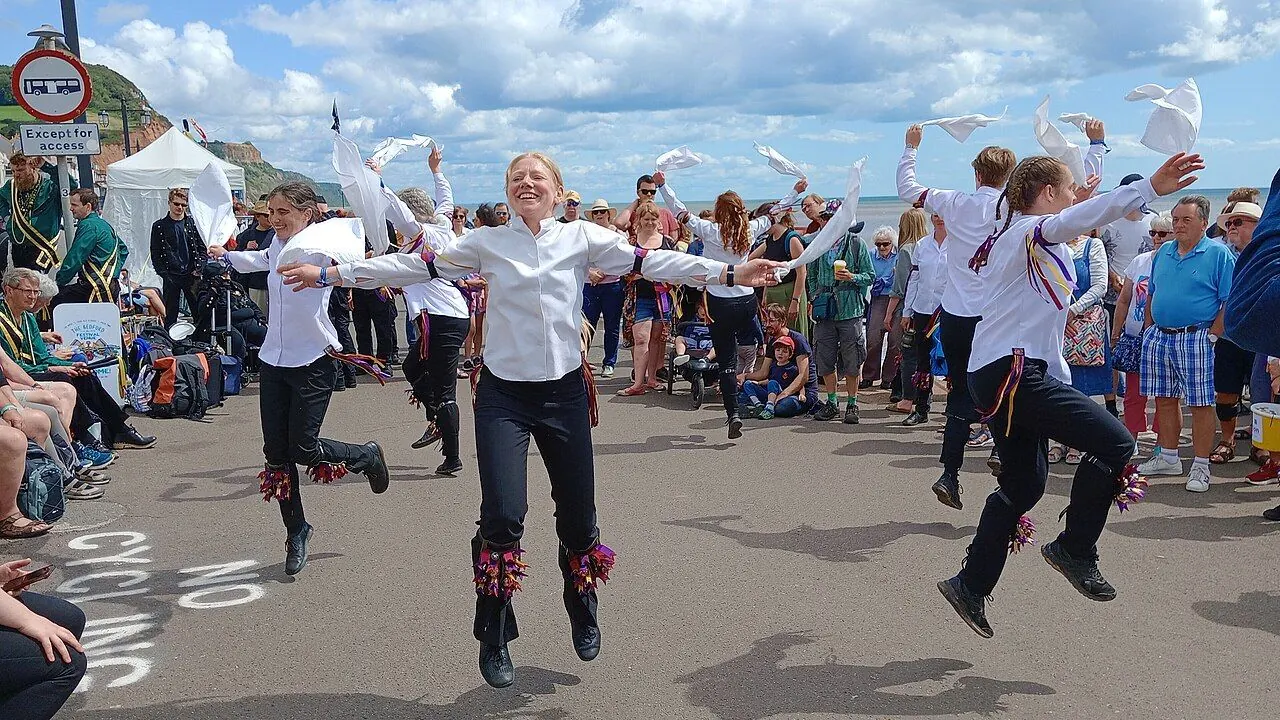
| Whitby Folk Week | Whitby, North Yorkshire coast | The week leading up to the August bank holiday weekend | Daily dance displays around town, ceilidhs every evening, workshops and sessions |
| Shrewsbury Folk Festival | West Mid Showground, Shrewsbury | August bank holiday weekend | A large dance programme, children's and youth festivals, on-site camping |
| Celtic Connections | Venues across Glasgow | January | Scottish traditional, Gaelic and roots music from around the world |
What each one feels like
Cambridge Folk Festival is held in the grounds of Cherry Hinton Hall and first opened its gates in 1965. It is a concert-led event, with established names and newer folk acts across its stages, plus camping for festivalgoers who stay for the whole event.
Sidmouth Folk Festival was established in 1955 by the English Folk Dance and Song Society. It spreads through the East Devon seaside town for a week, with folk performances, workshops, ceilidhs and dance displays, and describes itself as an immersive, participative festival rather than a spectator event.
Whitby Folk Week takes place every August in the fishing town of Whitby, on the North Yorkshire coast at the edge of the North York Moors. It always runs during the week leading up to the weekend containing the August bank holiday Monday, a few weeks after Sidmouth and on the opposite coast. The week celebrates British traditional song, dance, music and storytelling, with dance displays around the town, parades to open and close the week, and ceilidhs and dances every evening at the Whitby Pavilion.
Shrewsbury Folk Festival fills the late summer bank holiday weekend at the West Mid Showground in Shropshire, with several stages of music, a dedicated dance programme featuring morris and other dance sides, and separate programming for children and young people. Celtic Connections, presented by Glasgow Life and first held in 1994, turns Glasgow into a folk city each January, with concerts in the Glasgow Royal Concert Hall and venues across the city, alongside education work with schools.
Long-running festivals that have changed
Festivals come and go, even long-established ones. Towersey Festival, which began in 1965 as a fundraising event for the memorial hall in the village of Towersey and later moved to the Claydon Estate in Buckinghamshire, ended after its 2024 edition, citing rising costs.
The best-known UK folk festivals are long running and take place in recognisable windows, but details such as dates, opening times and camping should be treated as provisional until confirmed on each festival's official site.