Rapper and Longsword Dancing
Flexible blades from the Durham and Northumberland coalfield, rigid swords from Sheffield and the moors, and the winter customs that kept both alive.
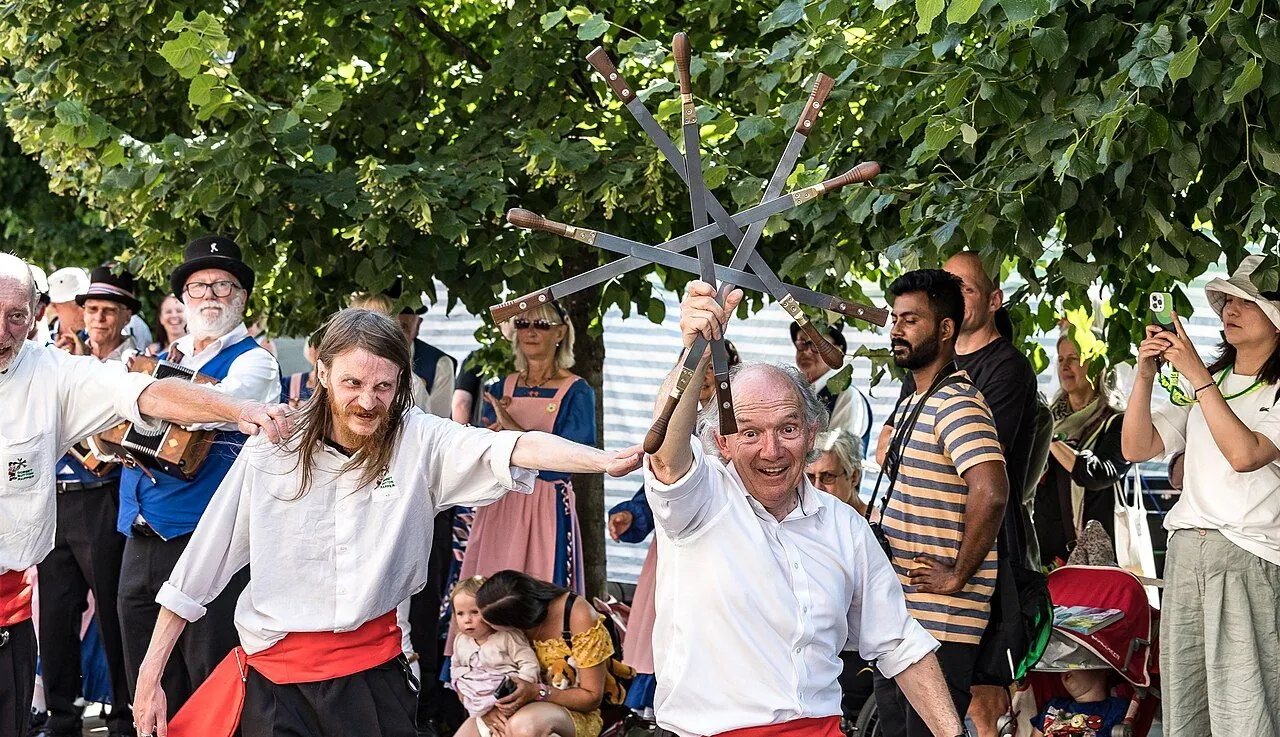
Sword dancing in northern England survives as a living custom in two distinct styles: the Yorkshire longsword dance, performed by teams of six or eight dancers linked by rigid swords, and the fast North East rapper dance, performed by five dancers with short, flexible blades, traditionally indoors on a wooden floor. Both end with the swords woven into a lock held up for the audience.
Longsword in Yorkshire
The longsword tradition is based in Yorkshire and a little further north. The dance is a connected series of figures that wind a team of dancers around each other, each dancer linked to the neighbours by a sword held between the hands, stepping or leaping over and under the blades. Longswords are longer than rapper swords and do not bend. The dance ends with the "lock", all the swords woven together and held aloft.
Unlike many English dances, which are mostly kept by revival teams, longsword is still danced by some of its own village teams. Handsworth and Grenoside, both from Sheffield, perform their old dances in distinctive military-style uniforms, traditionally on Boxing Day. Several teams have a Captain dressed differently from the others, and in some performances the Captain is ceremonially "beheaded" by the other dancers. On the North York Moors, the Goathland Plough Stots are a rare surviving team; revived in 1922 after a forty-year break, they keep dances that date to at least the early 19th century. Flamborough on the coast has its own tradition too.
Rapper from the mining communities
Rapper comes from the pit villages of North East England, on both the Durham and Northumberland banks of the Tyne. Five dancers are linked by short, flexible metal strips with wooden handles on both ends. The dance is fast and compact, with rapid figures punctuated by step dancing, and the swords are interlinked and shown to the audience before the whirling resumes. Many teams add two characters, Tommy and Betty, who announce the dance, talk to the crowd and collect money. Some teams open with a calling-on song.
When and where to see sword dancing
English sword dancing is documented from the 1700s, and many performances seem to have been linked to Plough Monday, the first Monday after 6 January, when farm work resumed after Christmas. Dancers would go with the plough boys through the village asking householders for money; the Goathland team's name recalls that they once dragged a plough themselves, "stots" being an old word for bullocks. Ryedale Folk Museum notes that on the North York Moors the midwinter celebrations peaked on Plough Monday, and the Goathland team still dances in and around the village in mid-January, usually on the Saturday after Plough Monday. Boxing Day remains the date for the Sheffield teams.
For rapper, the main showcase is DERT, the Dancing England Rapper Tournament, the national competition for the dance. It is usually held in spring and is organised by a different team in a different town each year, with teams dancing in pubs and judged on sword handling, stepping, music and the Tommy and Betty characters. Folk festivals often include sword teams too. Dates and venues change, so check the team's or event's official site before travelling.
Sources checked
- efdss.org/learning/resources/beginners-guides/37-english-folk-dance/2177-rapper-sword
- efdss.org/learning/resources/beginners-guides/34-english-folk-costume/2470-efdss-section9-longsword
- ryedalefolkmuseum.co.uk/spectacular-sword-dancing-festivities-on-the-moors
- calendarcustoms.com/articles/goathland-plough-stots