Learning the Melodeon
The push-pull button box behind English dance music rewards patience, and the right first instrument makes the early months far easier.
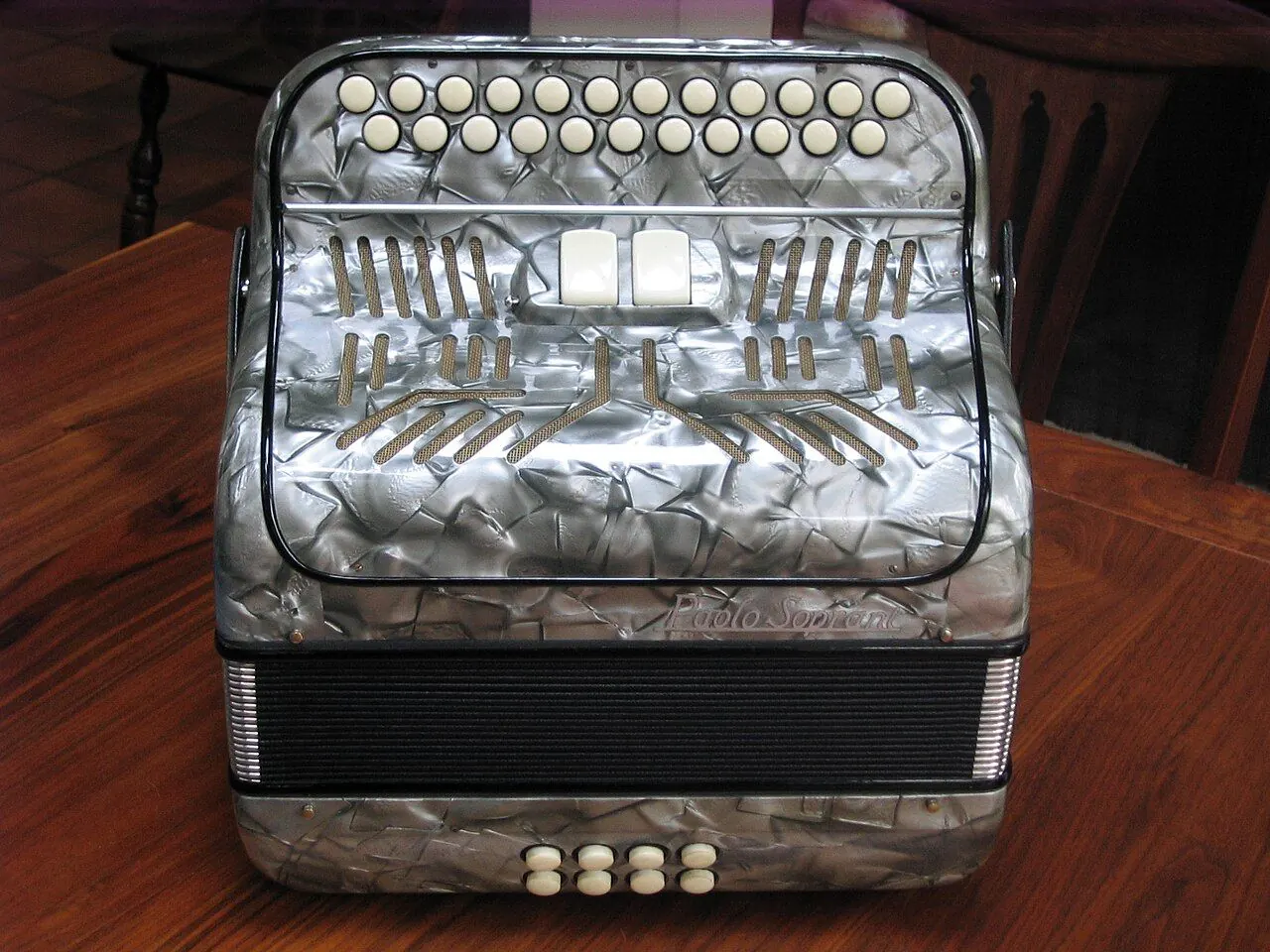
The melodeon is a diatonic button accordion whose notes change with the direction of the bellows. For English dance tunes the usual first box is a two-row D/G instrument, and the first lesson is bellows and rhythm control, not repertoire.
What is a melodeon?
The melodeon is a member of the accordion family and is widely used to play folk music. It has bellows in the middle, melody buttons on the right-hand side, and bass notes and chords on the left. Unlike a piano accordion, each button on a melodeon produces two notes: one when the bellows are pushed, and another when they are pulled. The English Folk Dance and Song Society (EFDSS) points out that this push-pull action gives a lively rhythm well suited to dance music, although the instrument can also be played smoothly to accompany songs.
The melodeon is sometimes called the diatonic accordion, because each row plays a fixed scale. In England, according to the EFDSS, melodeons are usually in D/G, or sometimes C/F.
Why start with a D/G melodeon?
On a two-row D/G box, the inside row of treble buttons is tuned to G major and the outer row to D major, a fourth lower, as the East Anglian Traditional Music Trust explains. The same source notes that D/G is a relatively modern tuning, introduced by the collector Peter Kennedy in the 1950s, and is now probably the most popular in England. Traditional East Anglian players, by contrast, favoured instruments in C or B/C.
Most workshop guides and teachers of English folk melodeon work with D/G boxes, which is the practical reason to choose one: the keys of D and G cover a large share of English dance tunes, and a first class or course will almost certainly expect that tuning. Two-row instruments usually have eight or twelve bass and chord buttons on the left. A two-row, eight-bass D/G box is a common minimum for beginners' workshops, including those at The Stables in Buckinghamshire.
When choosing a first instrument, new or second hand, it pays to have it checked by an experienced player or a specialist repairer before buying, because leaking bellows and out-of-tune reeds are costly to fix. Some teaching centres and workshops lend or hire instruments, which allows a learner to try the melodeon before committing to one.
How beginners usually start
Mastering the bellows is the first step. Because each button gives a different note on the push and on the pull, the player has to learn where the bellows change direction as part of every tune. The left-hand basses and chords support the right-hand melody and provide the rhythm; some teachers start learners with the left hand first, to build rhythmic control and coordination before a first tune with both hands.
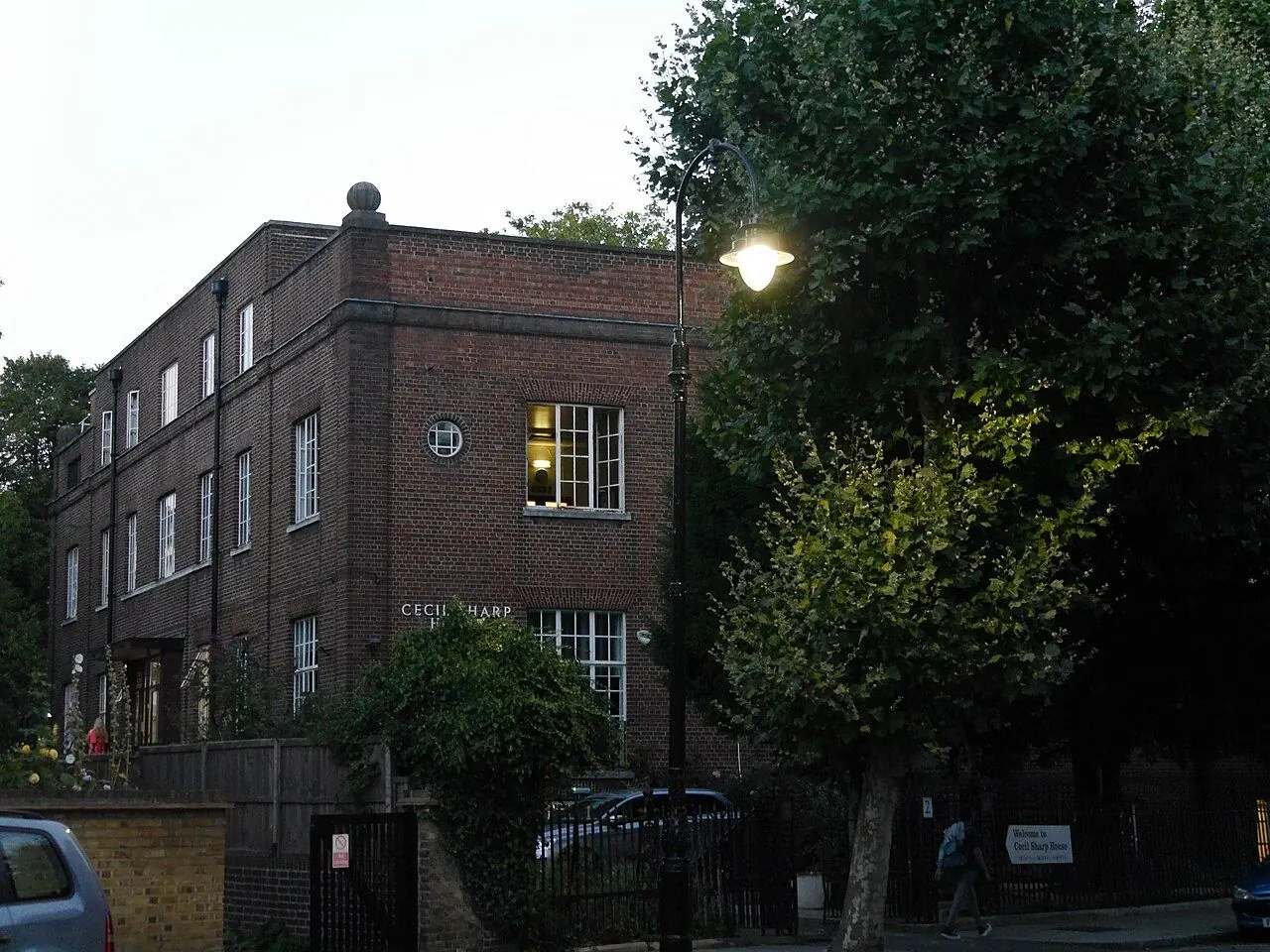
Beginners do not need to read music. The Stables' beginners' workshop states that notation is not required; EFDSS classes at Cecil Sharp House in London teach by ear, with notation and recordings available afterwards; and courses at Halsway Manor in Somerset, the National Centre for Folk Arts, are taught predominantly by ear. Many learners also use tablature, which shows which button to press and in which bellows direction.
A good routine is to learn one simple tune thoroughly, at a steady speed, until it feels like second nature, and only then take it faster or add ornamentation. English traditional music is rhythmic and danceable, so a steady, bouncy pulse matters more than speed.
Workshops at folk festivals, weekend courses at folk centres and local classes are the usual routes to a teacher, and playing slowly in a friendly session is the natural next step. Check each organiser's official site for current courses and instrument requirements before booking.